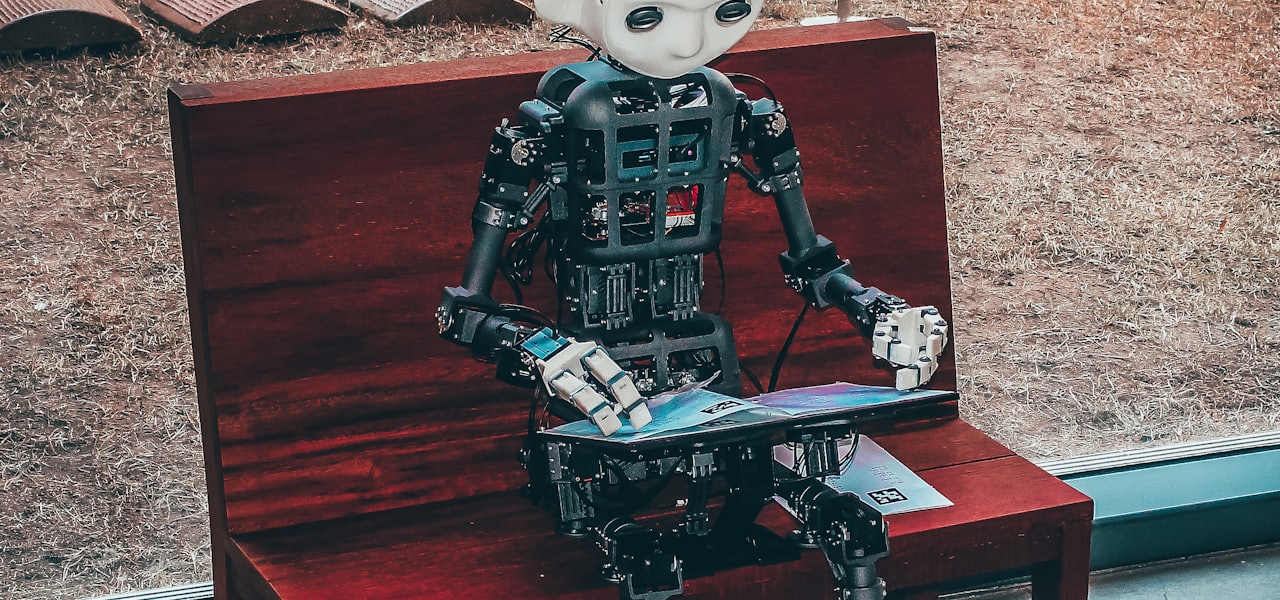
In artificial intelligence, symbolic artificial intelligence (also known as classical artificial intelligence or logic-based artificial intelligence) is the term for the collection of all methods in artificial intelligence research that are based on high-level symbolic (human-readable) representations of problems, logic, and search. Symbolic AI used tools such as logic programming, production rules, semantic nets and frames, and it developed applications such as knowledge-based systems (in particular, expert systems), symbolic mathematics, automated theorem provers, ontologies, the semantic web, and automated planning and scheduling systems. The Symbolic AI paradigm led to important ideas in search, symbolic programming languages, agents, multi-agent systems, the semantic web, and the strengths and limitations of formal knowledge and reasoning systems. Symbolic AI was the dominant paradigm of AI research from the mid-1950s until the mid-1990s. Researchers in the 1960s and the 1970s were convinced that symbolic approaches would eventually succeed in creating a machine with artificial general intelligence and considered this the ultimate goal of their field. An early boom, with early successes such as the Logic Theorist and Samuel's Checkers Playing Program, led to unrealistic expectations and promises and was followed by the first AI Winter as funding dried up. A second boom (1969–1986) occurred with the rise of expert systems, their promise of capturing corporate expertise, and an enthusiastic corporate embrace. That boom, and some early successes, e.g., with XCON at DEC, was followed again by later disappointment. Problems with difficulties in knowledge acquisition, maintaining large knowledge bases, and brittleness in handling out-of-domain problems arose. Another, second, AI Winter (1988–2011) followed. Subsequently, AI researchers focused on addressing underlying problems in handling uncertainty and in knowledge acquisition. Uncertainty was addressed with formal methods such as hidden Markov models, Bayesian reasoning, and statistical relational learning. Symbolic machine learning addressed the knowledge acquisition problem with contributions including Version Space, Valiant's PAC learning, Quinlan's ID3 decision-tree learning, case-based learning, and inductive logic programming to learn relations. Neural networks, a subsymbolic approach, had been pursued from early days and reemerged strongly in 2012. Early examples are Rosenblatt's perceptron learning work, the backpropagation work of Rumelhart, Hinton and Williams, and work in convolutional neural networks by LeCun et al. in 1989. However, neural networks were not viewed as successful until about 2012: "Until Big Data became commonplace, the general consensus in the Al community was that the so-called neural-network approach was hopeless. Systems just didn't work that well, compared to other methods. ... A revolution came in 2012, when a number of people, including a team of researchers working with Hinton, worked out a way to use the power of GPUs to enormously increase the power of neural networks." Over the next several years, deep learning had spectacular success in handling vision, speech recognition, speech synthesis, image generation, and machine translation, though symbolic approaches continue to be useful in a few domains such as computer algebra systems and proof assistants. == History == A short history of symbolic AI to the present day follows below. Time periods and titles are drawn from Henry Kautz's 2020 AAAI Robert S. Engelmore Memorial Lecture and the longer Wikipedia article on the History of AI, with dates and titles differing slightly for increased clarity. === The first AI summer: irrational exuberance, 1948–1966 === Success at early attempts in AI occurred in three main areas: artificial neural networks, knowledge representation, and heuristic search, contributing to high expectations. This section summarizes Kautz's reprise of early AI history. ==== Approaches inspired by human or animal cognition or behavior ==== Cybernetic approaches attempted to replicate the feedback loops between animals and their environments. A robotic turtle, with sensors, motors for driving and steering, and seven vacuum tubes for control, based on a preprogrammed neural net, was built as early as 1948. This work can be seen as an early precursor to later work in neural networks, reinforcement learning, and situated robotics. An important early symbolic AI program was the Logic theorist, written by Allen Newell, Herbert Simon and Cliff Shaw in 1955–56, as it was able to prove 38 elementary theorems from Whitehead and Russell's Principia Mathematica. Newell, Simon, and Shaw later generalized this work to create a domain-independent problem solver, GPS (General Problem Solver). GPS solved problems represented with formal operators via state-space search using means-ends analysis. During the 1960s, symbolic approaches achieved great success at simulating intelligent behavior in structured environments such as game-playing, symbolic mathematics, and theorem-proving. AI research was concentrated in four institutions in the 1960s: Carnegie Mellon University, Stanford, MIT and (later) University of Edinburgh. Each one developed its own style of research. Earlier approaches based on cybernetics or artificial neural networks were abandoned or pushed into the background. Herbert Simon and Allen Newell studied human problem-solving skills and attempted to formalize them, and their work laid the foundations of the field of artificial intelligence, as well as cognitive science, operations research and management science. Their research team used the results of psychological experiments to develop programs that simulated the techniques that people used to solve problems. This tradition, centered at Carnegie Mellon University would eventually culminate in the development of the Soar architecture in the middle 1980s. ==== Heuristic search ==== In addition to the highly specialized domain-specific kinds of knowledge that we will see later used in expert systems, early symbolic AI researchers discovered another more general application of knowledge. These were called heuristics, rules of thumb that guide a search in promising directions: "How can non-enumerative search be practical when the underlying problem is exponentially hard? The approach advocated by Simon and Newell is to employ heuristics: fast algorithms that may fail on some inputs or output suboptimal solutions." Another important advance was to find a way to apply these heuristics that guarantees a solution will be found, if there is one, not withstanding the occasional fallibility of heuristics: "The A algorithm provided a general frame for complete and optimal heuristically guided search. A is used as a subroutine within practically every AI algorithm today but is still no magic bullet; its guarantee of completeness is bought at the cost of worst-case exponential time. ==== Early work on knowledge representation and reasoning ==== Early work covered both applications of formal reasoning emphasizing first-order logic, along with attempts to handle common-sense reasoning in a less formal manner. ===== Modeling formal reasoning with logic: the "neats" ===== Unlike Simon and Newell, John McCarthy felt that machines did not need to simulate the exact mechanisms of human thought, but could instead try to find the essence of abstract reasoning and problem-solving with logic, regardless of whether people used the same algorithms. His laboratory at Stanford (SAIL) focused on using formal logic to solve a wide variety of problems, including knowledge representation, planning and learning. Logic was also the focus of the work at the University of Edinburgh and elsewhere in Europe which led to the development of the programming language Prolog and the science of logic programming. ===== Modeling implicit common-sense knowledge with frames and scripts: the "scruffies" ===== Researchers at MIT (such as Marvin Minsky and Seymour Papert) found that solving difficult problems in vision and natural language processing required ad hoc solutions—they argued that no simple and general principle (like logic) would capture all the aspects of intelligent behavior. Roger Schank described their "anti-logic" approaches as "scruffy" (as opposed to the "neat" paradigms at CMU and Stanford). Commonsense knowledge bases (such as Doug Lenat's Cyc) are an example of "scruffy" AI, since they must be built by hand, one complicated concept at a time. === The first AI winter: crushed dreams, 1967–1977 === The first AI winter was a shock: During the first AI summer, many people thought that machine intelligence could be achieved in just a few years. The Defense Advance Research Projects Agency (DARPA) launched programs to support AI research to use AI to solve problems of national security; in particular, to automate the translation of Russian to English for inte
CamScanner
CamScanner is a Chinese mobile app first released in 2010 that allows iOS and Android devices to be used as image scanners. It allows users to 'scan' documents (by taking a photo with the device's camera) and share the photo as either a JPEG or PDF. This app is available free of charge on the Google Play Store and the Apple App Store. The app is based on freemium model, with ad-supported free version and a premium version with additional functions. == History == On August 27, 2019, Russian cyber security company Kaspersky Lab discovered that recent versions of the Android app distributed an advertising library containing a Trojan Dropper, which was also included in some apps preinstalled on several Chinese mobiles. The advertising library decrypts a Zip archive which subsequently downloads additional files from servers controlled by hackers, allowing the hackers to control the device, including by showing intrusive advertising or charging paid subscriptions. Google took the app down after Kaspersky reported its findings. An updated version of the app with the advertising library removed was made available on the Google Play Store as of September 5, 2019. Kaspersky later acknowledged "We appreciate the willingness to cooperate that we've seen from CamScanner representatives, as well as the responsible attitude to user safety they demonstrated while eliminating the threat…The malicious modules were removed from the app immediately upon Kaspersky's warning, and Google Play has restored the app." In June 2020, as tensions along the Line of Actual Control between China and India continued, the Government of India decided to ban 118 Chinese apps, including TikTok and CamScanner citing data and privacy issues. On January 5, 2021, US President Donald Trump signed Executive Order 13971 banning Alipay, Tencent's QQ, QQ Wallet, WeChat Pay, CamScanner, Shareit, VMate and WPS Office to conduct US transactions. The Trump administration explained this act by saying that this move helps prevent personal information such as text, phone calls and photos collected from rivals. However, the Biden administration did not meet the February 2021 deadline for implementing the executive order, allowing these apps to operate in the US and revoked the previous executive order Executive Order 14034 of June 9, 2021.
Content Disarm and Reconstruction
Content Disarm and Reconstruction (CDR) is a computer security technology for removing potentially malicious code from files. Unlike malware analysis, CDR technology does not determine or detect malware's functionality but removes all file components that are not approved within the system's definitions and policies. It is used to prevent cyber security threats from entering a corporate network perimeter. Channels that CDR can be used to protect include email and website traffic. Advanced solutions can also provide similar protection on computer endpoints, or cloud email and file sharing services. There are three levels of CDR; 1) flattening and converting the original file to a PDF, 2) stripping active content while keeping the original file type, and 3) eliminating all file-borne risk while maintaining file type, integrity and active content. Beyond these three levels, there are also more advanced forms of CDR that is able to perform "soft conversion" and "hard conversion", based on the user's preference in balancing usability and security. == Applications == CDR works by processing all incoming files of an enterprise network, deconstructing them, and removing the elements that do not match the file type's standards or set policies. CDR technology then rebuilds the files into clean versions that can be sent on to end users as intended. Because CDR removes all potentially malicious code, it can be effective against zero-day vulnerabilities that rely on being an unknown threat that other security technologies would need to patch against to maintain protection. CDR can be used to prevent cyber threats from variety of sources: Email Data Diodes Web Browsers Endpoints File Servers FTP Cloud email or webmail programs SMB/CIFS Removable media scanning (CDR Kiosk) CDR can be applied to a variety of file formats including: Images Office documents PDF Audio/video file formats Archives HTML == Open source implementations == DocBleach ExeFilter
Scikit-learn
scikit-learn (formerly scikits.learn and also known as sklearn) is a free and open-source machine learning library for the Python programming language. It features various classification, regression and clustering algorithms including support-vector machines, random forests, gradient boosting, k-means and DBSCAN, and is designed to interoperate with the Python numerical and scientific libraries NumPy and SciPy. Scikit-learn is a NumFOCUS fiscally sponsored project. == Overview == The scikit-learn project started as scikits.learn, a Google Summer of Code project by French data scientist David Cournapeau. The name of the project derives from its role as a "scientific toolkit for machine learning", originally developed and distributed as a third-party extension to SciPy. The original codebase was later rewritten by other developers. In 2010, contributors Fabian Pedregosa, Gaël Varoquaux, Alexandre Gramfort and Vincent Michel, from the French Institute for Research in Computer Science and Automation in Saclay, France, took leadership of the project and released the first public version of the library on February 1, 2010. In November 2012, scikit-learn as well as scikit-image were described as two of the "well-maintained and popular" scikits libraries. In 2019, it was noted that scikit-learn is one of the most popular machine learning libraries on GitHub. At that time, the project had over 1,400 contributors and the documentation received 42 million visits in 2018. According to a 2022 Kaggle survey of nearly 24,000 respondents from 173 countries, scikit-learn was identified as the most widely used machine learning framework. == Features == Large catalogue of well-established machine learning algorithms and data pre-processing methods (i.e. feature engineering) Utility methods for common data-science tasks, such as splitting data into train and test sets, cross-validation and grid search Consistent way of running machine learning models (estimator.fit() and estimator.predict()), which libraries can implement Declarative way of structuring a data science process (the Pipeline), including data pre-processing and model fitting == Examples == Fitting a random forest classifier: == Implementation == scikit-learn is largely written in Python, and uses NumPy extensively for high-performance linear algebra and array operations. Furthermore, some core algorithms are written in Cython to improve performance. Support vector machines are implemented by a Cython wrapper around LIBSVM; logistic regression and linear support vector machines by a similar wrapper around LIBLINEAR. In such cases, extending these methods with Python may not be possible. scikit-learn integrates well with many other Python libraries, such as Matplotlib and plotly for plotting, NumPy for array vectorization, Pandas dataframes, SciPy, and many more. == History == scikit-learn was initially developed by David Cournapeau as a Google Summer of Code project in 2007. Later that year, Matthieu Brucher joined the project and started to use it as a part of his thesis work. In 2010, INRIA, the French Institute for Research in Computer Science and Automation, got involved and the first public release (v0.1 beta) was published in late January 2010. The project released its first stable version, 1.0.0, on September 24, 2021. The release was the result of over 2,100 merged pull requests, approximately 800 of which were dedicated to improving documentation. Development continues to focus on bug fixes, efficiency and feature expansion. The latest version, 1.8, was released on December 10, 2025. This update introduced native Array API support, enabling the library to perform GPU computations by directly using PyTorch and CuPy arrays. This version also included bug fixes, improvements and new features, such as efficiency improvements to the fit time of linear models. == Applications == Scikit-learn is widely used across industries for a variety of machine learning tasks such as classification, regression, clustering, and model selection. The following are real-world applications of the library: === Finance and Insurance === AXA uses scikit-learn to speed up the compensation process for car accidents and to detect insurance fraud. Zopa, a peer-to-peer lending platform, employs scikit-learn for credit risk modelling, fraud detection, marketing segmentation, and loan pricing. BNP Paribas Cardif uses scikit-learn to improve the dispatching of incoming mail and manage internal model risk governance through pipelines that reduce operational and overfitting risks. J.P. Morgan reports broad usage of scikit-learn across the bank for classification tasks and predictive analytics in financial decision-making. === Retail and E-Commerce === Booking.com uses scikit-learn for hotel and destination recommendation systems, fraudulent reservation detection, and workforce scheduling for customer support agents. HowAboutWe uses it to predict user engagement and preferences on a dating platform. Lovely leverages the library to understand user behaviour and detect fraudulent activity on its platform. Data Publica uses it for customer segmentation based on the success of past partnerships. Otto Group integrates scikit-learn throughout its data science stack, particularly in logistics optimization and product recommendations. === Media, Marketing, and Social Platforms === Spotify applies scikit-learn in its recommendation systems. Betaworks uses the library for both recommendation systems (e.g., for Digg) and dynamic subspace clustering applied to weather forecasting data. PeerIndex used scikit-learn for missing data imputation, tweet classification, and community clustering in social media analytics. Bestofmedia Group employs it for spam detection and ad click prediction. Machinalis utilizes scikit-learn for click-through rate prediction and relational information extraction for content classification and advertising optimization. Change.org applies scikit-learn for targeted email outreach based on user behaviour. === Technology === AWeber uses scikit-learn to extract features from emails and build pipelines for managing large-scale email campaigns. Solido applies it to semiconductor design tasks such as rare-event estimation and worst-case verification using statistical learning. Evernote, Dataiku, and other tech companies employ scikit-learn in prototyping and production workflows due to its consistent API and integration with the Python ecosystem. === Academia === Télécom ParisTech integrates scikit-learn in hands-on coursework and assignments as part of its machine learning curriculum. == Awards == 2019 Inria-French Academy of Sciences-Dassault Systèmes Innovation Prize: Awarded in recognition of scikit-learn's impact as a major free software breakthrough in machine learning and its role in the digital transformation of science and industry. 2022 Open Science Award for Open Source Research Software: Awarded by the French Ministry of Higher Education and Research as part of the second National Plan for Open Science. The project was recognized in the "Community" category for its technical quality, its large international contributor network, and the quality of its documentation.
Client-side persistent data
Client-side persistent data or CSPD is a term used in computing for storing data required by web applications to complete internet tasks on the client-side as needed rather than exclusively on the server. As a framework it is one solution to the needs of Occasionally connected computing or OCC. A major challenge for HTTP as a stateless protocol has been asynchronous tasks. The AJAX pattern using XMLHttpRequest was first introduced by Microsoft in the context of the Outlook e-mail product. The first CSPD were the 'cookies' introduced by the Netscape Navigator. ActiveX components which have entries in the Windows registry can also be viewed as a form of client-side persistence.
Agentive logic
Agentive logic (also called the logic of action or logic of agency) is the field of philosophical logic and logic in computer science that studies formal representations of agents, their actions, and their abilities. An agentive logic in the narrower sense is a formal system whose primitive operators express that an agent does something, can do something, or sees to it that something is the case. Agentive logics generalise modal logic by adding modalities indexed to agents and to actions. Typical examples include: STIT logics (from sees to it that) with operators of the form [ i s t i t : φ ] {\displaystyle [i\ {\mathsf {stit}}:\varphi ]} meaning that agent i {\displaystyle i} sees to it that φ {\displaystyle \varphi } holds; dynamic logics of action with program-like modalities [ α ] φ {\displaystyle [\alpha ]\varphi } and ⟨ α ⟩ φ {\displaystyle \langle \alpha \rangle \varphi } meaning, roughly, that after every (respectively, some) execution(s) of action α {\displaystyle \alpha } , φ {\displaystyle \varphi } holds; logics with explicit agentive operators such as "can do", "brings about", or "is able to ensure". Agentive logics are used in action theory in philosophy, in the semantics of natural language, in the theory of program verification, and in artificial intelligence, where they underpin formalisms for reasoning about actions, planning, and intelligent agents. == Terminology and scope == The adjective agentive derives from the Latin agens ("one who acts") and originally referred to the grammatical agent of a verb. In logical contexts it designates operators or predicates whose primary argument position is an agent rather than a proposition alone, for example A i φ {\displaystyle A_{i}\varphi } ("agent i {\displaystyle i} does φ {\displaystyle \varphi } ") or C i φ {\displaystyle C_{i}\varphi } ("agent i {\displaystyle i} can bring about φ {\displaystyle \varphi } "). In contemporary literature, agentive logic is sometimes used narrowly for formal reconstructions of St. Anselm's modal account of facere ("to do"). More broadly, the term is used interchangeably with logic of action or logic of agency to cover a family of modal and dynamic logics designed to capture the structure of action and choice. == Historical background == === Medieval and early modern roots === Medieval logicians already explored analogies between modalities of action and alethic modalities such as possibility and necessity, for instance, in discussions of obligation and power. An influential early agentive analysis is due to St. Anselm (11th century), who treated "doing φ {\displaystyle \varphi } " as a kind of modal operator on propositions, anticipating later modal logics of agency. Modern reconstructions of Anselm's theory show that the resulting "agentive logic" can be modelled with neighbourhood semantics and satisfies a recognisable square of opposition. === Modern logic of action === Modern study of the logic of action began in the mid-20th century, parallel to developments in deontic logic and tense logic. Early systems were proposed by Georg Henrik von Wright, Stig Kanger, and others, often motivated by questions about norms and responsibility. From the 1960s onward, two largely independent but eventually converging traditions emerged: a branching-time tradition, culminating in STIT logics, emphasising agents' choices among possible futures; and dynamic logics of programs and actions, developed within computer science to reason about program execution. In the 1990s and 2000s, action logics were further developed in connection with knowledge representation, planning, and multi-agent systems in AI, and with dynamic and update semantics in linguistics. == Core ideas == Despite their diversity, most agentive logics share some general themes: Agents are treated as explicit indices of modal operators, as in [ i d o e s ] φ {\displaystyle [i\ {\mathsf {does}}]\varphi } or C i φ {\displaystyle C_{i}\varphi } . Actions are represented either implicitly, via changes between possible worlds along an accessibility relation, or explicitly, as terms denoting primitive and composite actions. Choice and ability are captured by modalities describing what an agent can ensure, usually relative to assumptions about the environment and other agents. Formal properties such as closure under composition, interaction between different agents, and connections to obligation (what an agent ought to do) and knowledge (what an agent knows how to do) are investigated. == STIT logics == STIT ("sees to it that") logics, originating in work by Nuel Belnap and collaborators, treat agency in a branching-time framework. A STIT model consists of a partially ordered set of moments with a tree-like structure, sets of histories (maximal branches through the tree), and for each agent at each moment, a partition of the histories through that moment representing the choices available to the agent. Intuitively, an agent's action at a moment determines which equivalence class (choice cell) of histories becomes actual; a formula [ i s t i t : φ ] {\displaystyle [i\ {\mathsf {stit}}:\varphi ]} is true at a history–moment pair if φ {\displaystyle \varphi } holds on all histories in the choice cell corresponding to the agent's current action. Different STIT operators have been distinguished, notably: the Chellas STIT operator, often written [ i c s t i t : φ ] {\displaystyle [i\ {\mathsf {cstit}}:\varphi ]} , which requires only that the agent's choice guarantees φ {\displaystyle \varphi } ; and the deliberative STIT operator, [ i d s t i t : φ ] {\displaystyle [i\ {\mathsf {dstit}}:\varphi ]} , which additionally requires that φ {\displaystyle \varphi } is not already historically necessary. STIT frameworks have been extended with group agency operators, temporal modalities, epistemic operators, and deontic operators to study responsibility, collective action, and obligations under indeterminism. == Dynamic logics of action == Dynamic logic was originally developed to reason about the behaviour of computer programs, treating program execution as a kind of action. In propositional dynamic logic (PDL), action terms α , β , … {\displaystyle \alpha ,\beta ,\dots } denote abstract programs or actions, and formulas of the form [ α ] φ {\displaystyle [\alpha ]\varphi } and ⟨ α ⟩ φ {\displaystyle \langle \alpha \rangle \varphi } express that all, respectively some, terminating executions of α {\displaystyle \alpha } lead to states where φ {\displaystyle \varphi } holds. From the standpoint of agentive logic, dynamic logic provides: a language for building complex actions from primitives via sequencing, choice, and iteration (e.g., α ; β {\displaystyle \alpha ;\beta } , α ∪ β {\displaystyle \alpha \cup \beta } , α ∗ {\displaystyle \alpha ^{}} ); a Kripke semantics in which actions correspond to labelled accessibility relations; and proof systems (such as Hoare logic and weakest precondition calculi) for reasoning about the correctness of action sequences. Extensions such as concurrent dynamic logic add operators for parallel composition, allowing reasoning about interacting processes and concurrent actions. John-Jules Ch. Meyer and others have argued that dynamic logic is a natural base for logics of agents, by adding modalities for knowledge, belief, and ability on top of the action modalities. Dynamic logics have also been applied to normative reasoning, yielding dynamic deontic logics where actions are related to obligations and permissions, and to dynamic epistemic logics in which information-changing actions such as announcements are modelled as programs. == Situation calculus and other action formalisms == In artificial intelligence, reasoning about action and change is often based on first-order languages that explicitly represent situations, events, and fluents (time-varying properties). The best known is situation calculus, introduced by John McCarthy and developed extensively by Raymond Reiter. In such formalisms: action terms name primitive actions; a function symbol (often d o {\displaystyle {\mathsf {do}}} ) maps an action and a situation to a successor situation; and axioms describe which fluents hold in which situations and how actions change them. Reiter's successor state axioms give compact specifications of how each fluent changes under all actions, and precondition axioms specify when actions are possible. Related formalisms include the event calculus and fluent calculus, which provide alternative ways of representing events and their effects. While these systems are often first-order rather than modal, they are closely related to agentive logics: their action terms and transition structures can be seen as providing models for dynamic or STIT-style modalities, and conversely, dynamic logics can be used as abstract specification languages for such AI formalisms. == Ability, agency, and related modalities == Many agentive logics introduce explicit operators for ability or "can-do"
Invoicera
Invoicera is an online invoicing software. The software was created by a company with the same name that was founded in 2006, had 125 employees, and is based in India. It allows users to monitor, dispatch, and accept invoices in one web service. After signing up for the service, users are assigned a personal subdomain to set up their invoice configuration. It allows users to add clients' data to the service through uploading a Microsoft Excel file. Invoicera is compatible with businesses of varying sizes, including freelancers, small businesses, and large businesses. It is compatible with Basecamp, a project-management tool, so Invoicera can upload data from Basecamp. The software interfaces with more than 25 payment gateways. It supports subscriptions and repeated invoices and allows clients to schedule late fees when payments have not been made on time. Invoicera uses freemium model, letting users dispatch an unrestricted number of invoices to at most three customers. Chelsea Krause wrote in a 2019 review for Merchant Maverick, "Unfortunately, the software isn't as developed as it could be. Time tracking and reporting are limited and there are no live bank feeds — which is surprising for a company so focused on automation (especially since even many of the worst invoicing options out there still offer live bank feeds)." She further criticized Invoicera for having bad customer service and the software for not having recent changes. Brian Turner wrote in TechRadar that Invoicera had fewer templates compared to the other services he reviewed but "the ones offered are fully customizable". Rob Clymo wrote in TechRadar that "Invoicera lets you automate your invoicing and billing needs without too much in the way of hassle" and that although it "isn't a complete accounts solution ... it's a powerful supplement".